What Is a Travel eSIM and How Does It Work Abroad?
TL;DR
A plain-language guide to travel eSIMs for Canadians: what they are, how they connect, what data-only means, and how to use one beside your Canadian SIM.
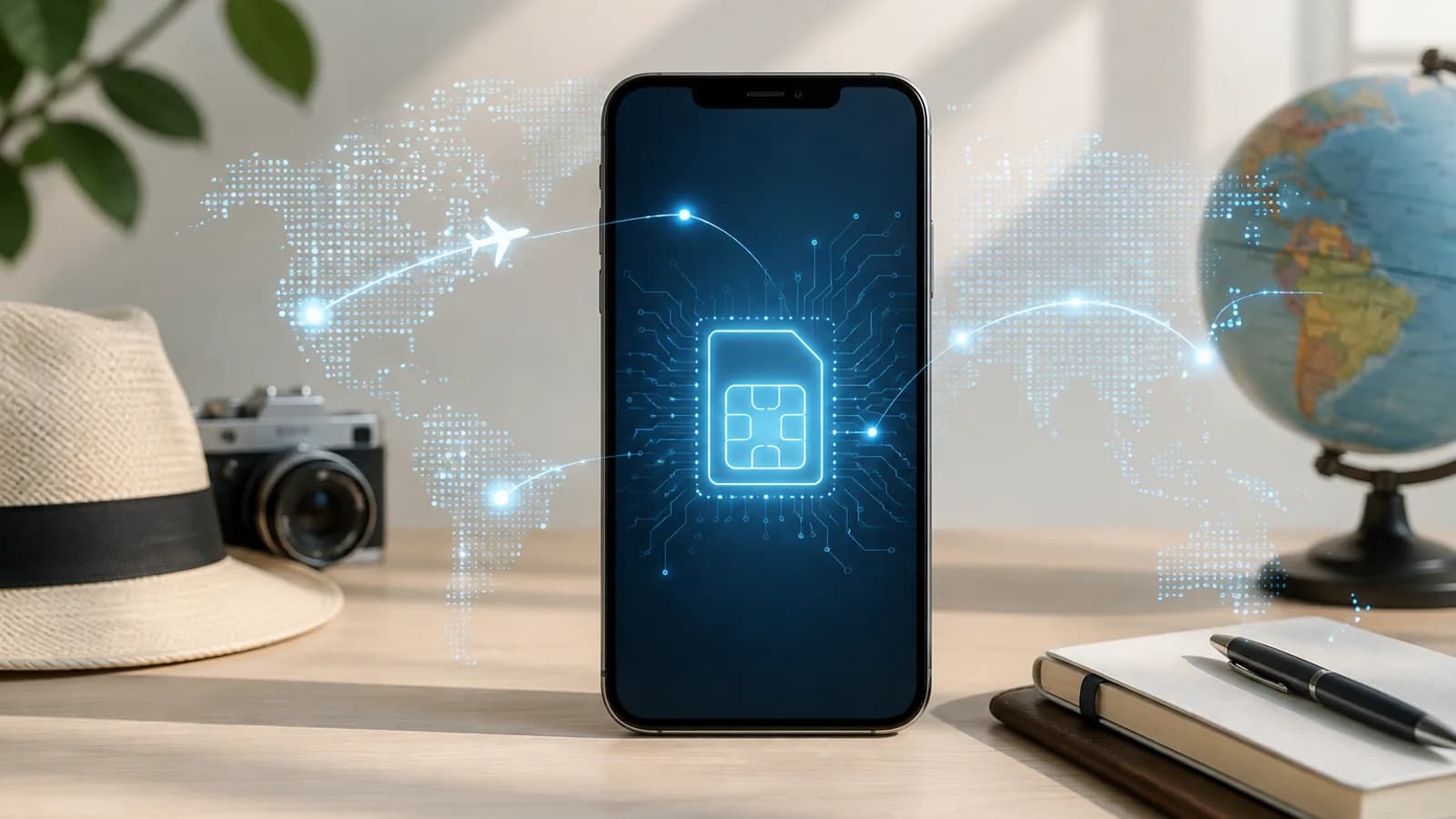
A travel eSIM is a digital mobile plan that gives your phone cellular data in another country or region. Instead of buying a plastic SIM card after landing, you download the plan to an eSIM-compatible, unlocked phone and select it for mobile data while you travel.
For a Canadian traveller, that can mean opening maps at the airport, messaging an accommodation host, ordering a ride, checking a boarding pass, or translating a menu without using your Canadian carrier's everyday roaming data.
The word “eSIM” describes the technology. “Travel eSIM” describes how the plan is used: it is purchased for a trip, destination, or travel period rather than being your regular Canadian mobile subscription.
Quick answer
A travel eSIM:
- Is downloaded digitally instead of inserted as a plastic card.
- Usually provides mobile data for one country, a region, or multiple destinations.
- Often works alongside your Canadian SIM on a compatible dual-SIM phone.
- Is commonly data-only, so it may not include a local phone number, voice calls, or SMS.
- Requires an eSIM-compatible and unlocked phone.
- Is normally installed before departure and selected for data after arrival.
If you are not sure whether your phone supports it, start with the eSIM compatibility guide or check the compatibility page.
What is an eSIM?
An eSIM is an embedded SIM: a programmable SIM component built into the phone. It performs the same basic role as a physical SIM by allowing a mobile plan to identify and authenticate your device on a network. The difference is that the plan is downloaded digitally rather than stored on a removable plastic card.
Your phone can store one or more eSIM profiles depending on the model, and it may be able to keep more than one line active at the same time. The exact number of profiles and active lines varies by device.
An eSIM does not automatically mean free service or international access. You still need a mobile plan from a carrier or travel eSIM provider, and that plan still has its own coverage, data, validity, and usage rules.
How does a travel eSIM work?
The process usually has four parts:
- Choose a plan. Select a destination or region and a data allowance that matches your trip.
- Download the eSIM profile. Use a QR code, activation link, or manual details while connected to Wi-Fi.
- Turn on the travel line. Follow the provider's timing instructions; some plans begin when installed, while others begin on first connection.
- Use it for data. Select the travel eSIM as your cellular or mobile data line after you arrive.
The eSIM profile is the digital instruction set that tells your phone how to access the plan. It is not the same thing as the data allowance itself, and installing a profile does not necessarily mean the plan is already using data.
For a practical setup walkthrough, read how to install a travel eSIM. You can also use the device-specific guides for iPhone and Samsung or Android.
What can you do with a data-only travel eSIM?
Data-only means the plan is designed to provide internet access rather than a traditional mobile phone number. You can still do most things travellers need because many apps communicate over data.
With a data-only travel eSIM, you can usually use:
- Google Maps or Apple Maps.
- WhatsApp, Messenger, Signal, and other messaging apps.
- iMessage and FaceTime when your Apple setup supports them.
- Email, web browsing, translation, and travel research.
- Airline, hotel, transit, and rideshare apps.
- Internet banking and two-factor authentication apps.
- Social media and photo sharing.
Traditional calls and SMS are different. You may be able to keep your Canadian number active for important messages, but carrier charges and roaming rules can apply. Read does a travel eSIM include calls and texts? and how to use an eSIM while keeping your Canadian number before you travel.
Can a travel eSIM replace your Canadian SIM?
Usually, it does not need to. Many newer phones support a dual-SIM setup, allowing your Canadian line and travel eSIM to remain in the same device.
The common arrangement is:
- Canadian line: kept for your usual number or selected services, subject to your carrier's rules.
- Travel eSIM: selected as the mobile data line abroad.
Your phone settings matter. Turn off automatic data switching so the device does not use the Canadian line when the travel eSIM has a weak signal. Keep data roaming off on your Canadian line. If the travel provider says roaming is required for its eSIM, that setting can be enabled on the travel line only.
This is why a travel eSIM is not exactly the same as “turning off your SIM.” It is usually an additional line with a separate purpose.
Travel eSIM vs Canadian roaming
With Canadian roaming, your existing carrier lets your Canadian plan connect to a partner network abroad. You generally keep your Canadian number and normal service, but the carrier's daily fees, travel-pass rules, or pay-per-use charges apply.
With a travel eSIM, you add a separate plan for the destination. It is often prepaid and data-focused. You may get more control over the amount of data you buy, but you may not get a local number or traditional voice and SMS.
Neither option is universally better. Roaming can be the simplest choice for a short work trip when you need your number. A travel eSIM can be a better fit for a holiday when you mainly need affordable data. Compare the two in roaming pass vs travel eSIM for Canadians.
Travel eSIM vs a local physical SIM
A local SIM is a physical card purchased from a carrier shop, airport kiosk, or retailer in the destination. It may include a local number and can be good value for a long stay in one country.
A travel eSIM can be installed before leaving Canada, which reduces the need to find a store after landing. It also lets you keep your Canadian SIM in the phone. The tradeoff is that many travel eSIMs are data-only and may cost more than a local long-term plan.
For the full comparison, read travel eSIM vs local SIM card.
What does a travel eSIM cost?
There is no universal price because plans vary by destination, data allowance, validity, network arrangement, and provider. A short single-country plan is usually evaluated differently from a regional plan for several countries or a high-data plan for remote work.
Look at the total price for the complete trip, not only the smallest tier. A plan that is too small can become more expensive if you need an emergency replacement or top-up. The travel eSIM cost and data guide explains how to estimate usage and compare plan value.
What you need before buying
Check these five things before selecting a plan:
Your phone supports eSIM
Look for Add eSIM, Add mobile plan, SIM Manager, or a similar option in the phone settings. Model support can vary by generation and region, so the exact model matters.
Your phone is unlocked
A carrier-locked phone may reject a travel eSIM even if the hardware supports eSIM. Canadian travellers should confirm the phone's lock status with their carrier before leaving.
The destination is covered
Read the plan's country list. A regional label is not enough if your itinerary includes a border crossing or an island stop that may be treated differently.
You have a connection for installation
The phone normally needs Wi-Fi or another internet connection to download the profile. Installing at home is easier than troubleshooting at an airport.
You understand when validity starts
Some plans start on installation, while others start when the line connects in the destination. Follow the provider's instructions rather than assuming all plans behave the same way.
A simple arrival setup
After landing, turn on the travel line and select it for cellular data. Confirm that automatic data switching is off. Check the Canadian line's data roaming setting, and follow the travel plan's instructions for the travel line.
Open a map, send a message, or load a website to test the connection before leaving the airport. If it does not work, do not delete the eSIM immediately. Check the coverage, selected data line, roaming requirement, network selection, and device restart steps first. The travel eSIM troubleshooting guide covers common fixes.
Frequently asked questions
Is a travel eSIM the same as a SIM card?
It performs a similar job, but an eSIM is built into the phone and downloaded digitally. A physical SIM is a removable card. Both still require a mobile plan and network coverage.
Do I need an eSIM-compatible phone?
Yes. Your phone also needs to be unlocked if you want to use a plan from a provider other than the carrier that sold it. Check the compatibility page before purchase.
Can I use a travel eSIM in Canada?
Only if the plan includes Canada and is intended to work there. Most travel eSIMs are purchased for use outside Canada, so review the destination list rather than assuming domestic coverage. If you are visiting Canada, compare Canada eSIM plans and check the selected offer's coverage and validity.
Will people still be able to call my Canadian number?
That depends on whether your Canadian line remains active and on your carrier's roaming rules. A data-only travel eSIM does not automatically provide voice service for your Canadian number.
Can I use WhatsApp with a travel eSIM?
Yes. WhatsApp uses internet data, so it can work over a data-only travel eSIM. Your account remains associated with your WhatsApp number unless you change it in the app.
Does installing an eSIM start the plan?
Sometimes. Activation timing is provider-specific. Read the plan instructions to see whether validity begins at installation, activation, or first network connection.
Can I share a travel eSIM with another phone?
Usually, the eSIM profile is installed on one device. You may be able to share its connection by hotspot if the plan and phone allow tethering, but that is different from installing the same eSIM on another phone. See hotspot with a travel eSIM for planning considerations.
Bottom line
A travel eSIM is a digital way to add destination-specific mobile data to a compatible, unlocked phone. It can work alongside your Canadian line, help you avoid relying on everyday roaming data, and let you install your connection before the trip. Check compatibility, coverage, validity, data, hotspot rules, and activation timing before you buy, then set up the line at home while you still have reliable Wi-Fi.